Episode 2: AI-Ready Engineering: Readable Code Is More Than a Human Preference

Jona Obrador • September 29, 2026

A function named processData can work perfectly. It accepts a record, checks a few conditions, and updates some fields before returning a result, so the ticket closes without incident. Six months later, another engineer opens the file and has to work out what data is being processed and which fields can safely change.


AI tools now open the same files and run into the same questions. They can trace variables and explain syntax, but when names are vague and business rules stay buried in the logic, the tool has to guess at what the code means.


In Episode 0, we connected engineering practice to AI readiness, and Episode 1 looked at how teams prepare their systems and processes for AI-assisted work. This episode focuses on one of the most practical foundations: readable code. An AI-ready codebase comes from making intent easier to see, rather than from extra comments or documentation written for a machine.

What: Readability Is Context
What: Readability Is Context

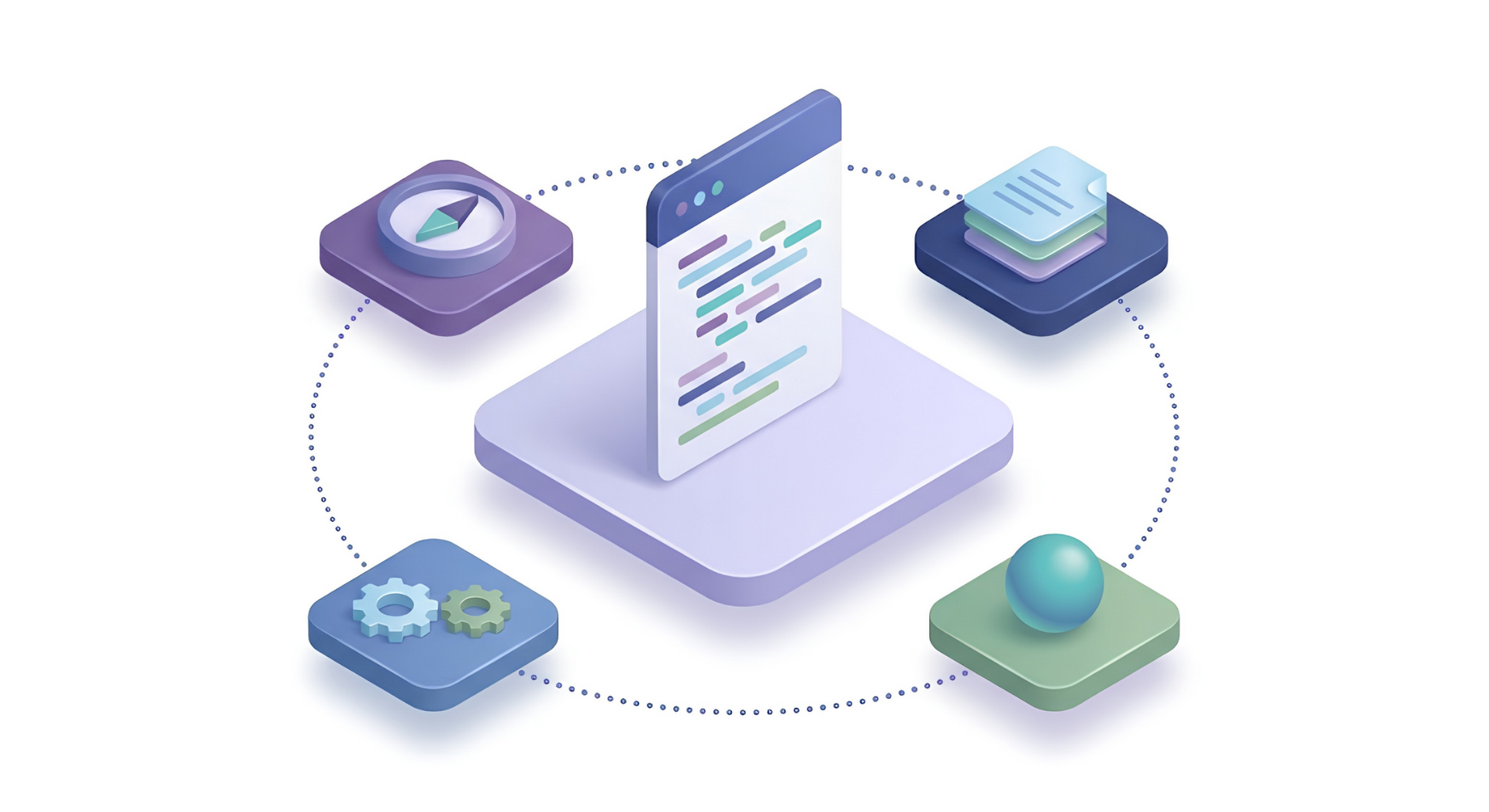
Readable code is often treated as a matter of style. We choose clearer names, keep functions short, and format everything consistently. Those habits help, but readability goes deeper than appearance: it gives both people and AI tools the context they need to reason about a system.


In practice, readable code answers the questions we would otherwise have to reconstruct from individual lines:

  • What responsibility belongs to each module
  • Which business concept a variable represents
  • Where data enters and leaves the system
  • What side effects an operation creates
  • Which conditions must remain true
  • Where a developer should make a change

Readable code is often treated as a matter of style. We choose clearer names, keep functions short, and format everything consistently. Those habits help, but readability goes deeper than appearance: it gives both people and AI tools the context they need to reason about a system.


In practice, readable code answers the questions we would otherwise have to reconstruct from individual lines:

  • What responsibility belongs to each module
  • Which business concept a variable represents
  • Where data enters and leaves the system
  • What side effects an operation creates
  • Which conditions must remain true
  • Where a developer should make a change

With those answers visible, we can understand the system without retracing every past decision. AI tools benefit for the same reason. When intent shows up in the structure and naming, the tool has fewer unknowns to resolve before it can explain or modify an implementation.


Consider two possible names for a function in a NetSuite sales order script:


updateRecord(data)


applyCustomerCreditLimit(salesOrder)


The first describes a technical action, while the second tells us which business rule is being enforced and which record it acts on. A developer reviewing the script and an AI tool asked to change it both start with fewer questions to answer. Readable code reduces the amount of context we have to guess.

With those answers visible, we can understand the system without retracing every past decision. AI tools benefit for the same reason. When intent shows up in the structure and naming, the tool has fewer unknowns to resolve before it can explain or modify an implementation.


Consider two possible names for a function in a NetSuite sales order script:


updateRecord(data)


applyCustomerCreditLimit(salesOrder)


The first describes a technical action, while the second tells us which business rule is being enforced and which record it acts on. A developer reviewing the script and an AI tool asked to change it both start with fewer questions to answer. Readable code reduces the amount of context we have to guess.

Why: Ambiguity Multiplies With AI

AI is good at finding patterns, which becomes useful when a codebase has clear and consistent patterns to find. That breaks down quickly in a NetSuite account where each script handles errors its own way and the same business concept goes by different names. When one large function also mixes validation logic with record updates, AI has no reliable model of how the system is supposed to work.


The tool can still generate an answer, and that answer may look reasonable. When the codebase is ambiguous, though, AI has to infer more, and every inference is another chance to misunderstand the system

AI is good at finding patterns, which becomes useful when a codebase has clear and consistent patterns to find. That breaks down quickly in a NetSuite account where each script handles errors its own way and the same business concept goes by different names. When one large function also mixes validation logic with record updates, AI has no reliable model of how the system is supposed to work.


The tool can still generate an answer, and that answer may look reasonable. When the codebase is ambiguous, though, AI has to infer more, and every inference is another chance to misunderstand the system.


We make the same kind of incorrect assumptions when code is unclear. What changes with AI is speed: it can produce a large change built on a wrong starting point before anyone notices the mistake.

Why: Plausible AI-Generated NetSuite Code Can Still Be the Wrong Solution

Readable code puts friction in the right place. Clear module boundaries make an unexpected change easier to spot, and specific names expose a function being used for the wrong purpose. Consistent patterns help in review too, because a deviation stands out against everything around it. 


Readability won't guarantee correctness on its own, but it makes correctness much easier to evaluate.

We make the same kind of incorrect assumptions when code is unclear. What changes with AI is speed: it can produce a large change built on a wrong starting point before anyone notices the mistake.


Readable code puts friction in the right place. Clear module boundaries make an unexpected change easier to spot, and specific names expose a function being used for the wrong purpose. Consistent patterns help in review too, because a deviation stands out against everything around it. 


Readability won't guarantee correctness on its own, but it makes correctness much easier to evaluate.

How: Make Intent Visible in the Code

How: Make Intent Visible in the Code

We can start by naming things after the business concept they represent. A variable called value says almost nothing, while remainingCredit gives the reader a reason to question a negative result. Good names explain what the data means to the business, beyond its data type.


Focused responsibilities come next. A function that loads a record, validates a customer, calculates a discount, sends an email, and updates an integration status gives the reader five different problems to understand at once. Splitting that work into separate functions creates clearer units of reasoning, and it makes it easier to ask AI for a contained change without affecting unrelated behavior.

We can start by naming things after the business concept they represent. A variable called value says almost nothing, while remainingCredit gives the reader a reason to question a negative result. Good names explain what the data means to the business, beyond its data type.


Focused responsibilities come next. A function that loads a record, validates a customer, calculates a discount, sends an email, and updates an integration status gives the reader five different problems to understand at once. Splitting that work into separate functions creates clearer units of reasoning, and it makes it easier to ask AI for a contained change without affecting unrelated behavior.

Predictable patterns help as well. When scripts handle validation, errors, logging, and configuration consistently, developers know where to look, and AI can use those patterns as local examples instead of inventing a new approach each time.


This matters in NetSuite development, where SuiteScript can combine record operations, searches, workflows, and integrations in the same implementation. A User Event script may respond to record events, while a scheduled script or Map/Reduce script handles larger processing jobs. When each script makes its entry points and data flow clear, we can reason about a change without treating the entire codebase as one undifferentiated system.


Side effects deserve the same visibility. A function that changes a record should look different from one that only calculates a value. If calling something updates data or sends a request to another system, its name and location should make that behavior hard to miss.


Finally, comments are most useful when they explain decisions rather than translate syntax. A comment such as "Set status to closed" adds little when the next line already says that. A comment explaining that the status must be set manually, because a specific integration does not trigger the standard workflow, preserves information the code cannot express by itself. That is the kind of context worth keeping.

Predictable patterns help as well. When scripts handle validation, errors, logging, and configuration consistently, developers know where to look, and AI can use those patterns as local examples instead of inventing a new approach each time.


This matters in NetSuite development, where SuiteScript can combine record operations, searches, workflows, and integrations in the same implementation. A User Event script may respond to record events, while a scheduled script or Map/Reduce script handles larger processing jobs. When each script makes its entry points and data flow clear, we can reason about a change without treating the entire codebase as one undifferentiated system.


Side effects deserve the same visibility. A function that changes a record should look different from one that only calculates a value. If calling something updates data or sends a request to another system, its name and location should make that behavior hard to miss.


Finally, comments are most useful when they explain decisions rather than translate syntax. A comment such as "Set status to closed" adds little when the next line already says that. A comment explaining that the status must be set manually, because a specific integration does not trigger the standard workflow, preserves information the code cannot express by itself. That is the kind of context worth keeping.

Code Should Explain More Than It Executes
Code is written once and read repeatedly. Reviews, production incidents, enhancements, migrations, and handovers all send someone back into the same files. That reader might be the original developer or an engineer seeing the system for the first time, and increasingly it is an AI tool asked to explain or change it.

Code is written once and read repeatedly. Reviews, production incidents, enhancements, migrations, and handovers all send someone back into the same files. That reader might be the original developer or an engineer seeing the system for the first time, and increasingly it is an AI tool asked to explain or change it.


Our goal is code that communicates clearly enough that neither a person nor an AI tool has to guess what we meant. Naming, boundaries, consistency, and visible side effects belong to the implementation itself, rather than being decoration added after the work is complete. Readable code has always been part of good engineering, and AI has given our codebase another reader and made the cost of ambiguity easier to see.

Code Should Explain More Than It Executes

Our goal is code that communicates clearly enough that neither a person nor an AI tool has to guess what we meant. Naming, boundaries, consistency, and visible side effects belong to the implementation itself, rather than being decoration added after the work is complete. Readable code has always been part of good engineering, and AI has given our codebase another reader and made the cost of ambiguity easier to see.


At ATSOURCE, we build NetSuite teams where maintainable systems begin with code that makes its intent clear. Our ERP Bayani write SuiteScript that the next developer and the next AI tool can read and extend with confidence, because AI can help engineers work faster while clarity keeps the entire team moving safely. 


If your team is preparing its codebase for AI-assisted work,
let's talk about what that looks like for your organization.

Jona Obrador Senior Netsuite Developer

Meet the Author

Jona has over a decade of experience in SuiteCloud Development on the NetSuite platform. She specializes in implementing advanced solutions and has led teams in creating high-quality software. Jona holds multiple certifications and has been recognized with awards like the Summit Award and Quality Champion Award.


Tags

Accelerate ERP Success with Expert Solutions

Ready to put what you've learned into practice? ATSOURCE delivers both the specialized talent and comprehensive NetSuite support you need to turn strategy into results.‍Connect with our experts today and move from planning to performance.
Purple AI code editor illustration on a white pedestal with glowing tech icons
By Jona Obrador • September 22, 2026
AI-generated NetSuite code can look correct while missing system context. Learn how engineers validate safer, better-fit solutions.
Podcast cover with purple AI icon on a white pedestal and text: “Episode 0: AI-Ready Engineering”
By Jona Obrador • September 15, 2026
Learn how AI-ready engineering makes NetSuite code clearer, safer to change, and easier for humans and AI tools to understand.
Purple people icons on a white platform with an upward arrow and a checkmark above them
By Jona Obrador • September 8, 2026
Learn how technical leadership for engineers builds trust, shares knowledge, and strengthens teams without requiring a management title.